
History of Domestic Cats: From Wildcats to Household Companions
The History of Domestic Cats stretches back thousands of years and is closely connected with the development of human agriculture, trade, cities, and culture. Unlike animals such as dogs, cattle, or horses, cats were not originally domesticated mainly through deliberate breeding. Instead, their relationship with humans appears to have developed gradually as wildcats began living near early farming settlements.
Over time, cats became useful hunters of rodents, valued companions, religious symbols, shipboard pest controllers, and eventually some of the most popular household pets in the world. Their journey from wild predators to domestic companions is one of the most fascinating examples of animal domestication.
The Wild Ancestors of Domestic Cats
Modern domestic cats belong to the species Felis catus, but their ancestry can be traced primarily to the African wildcat, especially the Near Eastern population commonly known as Felis silvestris lybica.
These wildcats naturally lived across parts of North Africa and Southwest Asia. They were small, adaptable predators that hunted rodents, birds, reptiles, and other small animals.
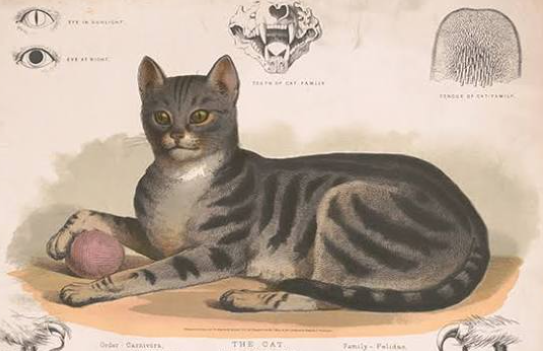
In appearance, African wildcats resemble some modern tabby cats. They usually have sandy or grayish coats with subtle stripes, long legs, and relatively slender bodies. Unlike many modern pets, however, wildcats generally avoid close contact with people.
The relationship between these wildcats and humans began to change when people started forming permanent agricultural settlements.
How Did Cats Become Domesticated?
The domestication of cats was probably very different from the domestication of many other animals.
Around 10,000 years ago, farming communities began storing large quantities of grain in the Near East. These food stores attracted mice and other rodents. Wildcats, in turn, were attracted by the abundance of prey.
Humans benefited from the presence of cats because the animals helped control pests around food supplies. Wildcats that were less fearful of people may have gained easier access to these hunting grounds.
This created a mutually beneficial relationship. Humans gained natural pest control, while cats gained reliable hunting opportunities and protection around settlements.
Over many generations, cats that tolerated human environments became increasingly associated with people. This gradual process is sometimes described as a form of self-domestication because humans may not initially have intentionally selected cats in the same way that they selected livestock.
Early Evidence of Cats Living With Humans
One of the most important archaeological discoveries related to the History of Domestic Cats comes from Cyprus.
Archaeologists discovered the remains of a human buried alongside a cat dating to roughly 9,500 years ago. Because cats were not native to Cyprus, the presence of the animal suggests that people deliberately transported cats to the island.
This discovery is significant because it demonstrates that humans had already developed a close relationship with cats thousands of years before the famous cat culture of ancient Egypt.
It also suggests that cats may have traveled with early farming communities as agriculture spread across the Mediterranean region.
Cats in Ancient Egypt
Ancient Egypt played an especially important role in the cultural history of cats.
Agricultural settlements along the Nile produced large quantities of grain, creating ideal environments for rodents. Cats helped protect food supplies and may also have hunted snakes and other animals around homes and farms.
Over time, cats became deeply associated with Egyptian religion and daily life.
One of the best-known Egyptian deities connected with cats was Bastet. She was associated with protection, fertility, family, and the household. Although Bastet was originally represented in different forms, she later became strongly associated with domestic cats.
Cats appear frequently in Egyptian paintings, sculptures, and archaeological remains. Some cats were even mummified, reflecting their religious importance.
However, the popular idea that all Egyptians universally worshipped individual cats is an oversimplification. Cats were respected and sometimes connected with religious practices, but their roles varied across different periods and communities.
How Cats Spread Around the Ancient World
As Mediterranean trade expanded, cats traveled far beyond Egypt and the Near East.
Merchants and sailors valued cats because they controlled rats and mice aboard ships. Rodents could destroy food supplies, damage cargo, and spread disease, making cats useful member