
The relationship between humans and cats began thousands of years ago, long before cats became familiar household pets. Today, domestic cats live in homes around the world, but their ancestors were independent wild predators that gradually adapted to human settlements.
Understanding The Origin of Domestic Cats means looking at archaeology, genetics, agriculture, trade, and changing human attitudes toward animals. Unlike many domesticated species, cats were probably not initially bred by humans for a specific physical trait. Instead, they seem to have entered human communities largely on their own.
Their transformation from wild hunters into companions was gradual, and much of that story began when early farming communities created an environment that attracted both rodents and the wildcats that hunted them.
The Wild Ancestors of Domestic Cats
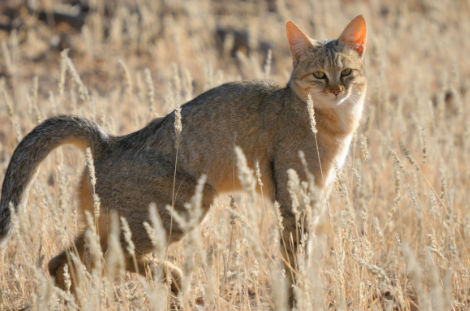
Modern domestic cats are closely related to the African and Near Eastern wildcat, commonly classified as Felis silvestris lybica.
These wildcats lived across parts of North Africa and Southwest Asia. They were well adapted to dry environments and survived by hunting small animals such as rodents, birds, and reptiles.
In appearance, they were not dramatically different from some modern tabby cats. They generally had slender bodies, long legs, striped tails, and sandy or grayish coats that helped them blend into dry landscapes.
This close resemblance is important because domestication did not completely transform the basic body structure of the cat. Modern house cats still retain many physical features and behaviors inherited from their wild ancestors, including stalking, pouncing, territorial marking, and a strong response to movement.
Cats Became Part of Human Culture Early
As cats became more closely associated with human settlements, people began representing them in art and decorative objects as well as keeping them for practical purposes.
This is especially visible in ancient cultures where feline images appeared in paintings, carvings, figurines, and sculpture. The long tradition of representing cats in three-dimensional form continues today, whether in museum reproductions, artistic collectibles, or a modern cat statue used as home or garden decoration.
These objects reflect something that began thousands of years ago: cats were no longer viewed only as useful hunters. They had also become recognizable cultural symbols.
That shift is an important part of the history of domestication because it shows how the relationship between humans and cats gradually expanded from practical coexistence to emotional, religious, and artistic significance.
How Farming Changed the Relationship Between Cats and Humans
The domestication of cats is closely connected with the rise of agriculture.
Around 10,000 years ago, communities in the Near East began settling more permanently and storing harvested grain.
Stored food created a new ecological opportunity for mice and other rodents. Human settlements provided shelter, food scraps, and large concentrations of grain, making them attractive environments for small mammals.
Wildcats soon followed the rodents.
For humans, this was beneficial. Cats helped reduce animals that could consume or contaminate stored food.
For wildcats, farming settlements offered a concentrated and predictable source of prey.
This relationship probably developed naturally rather than through deliberate capture and breeding. Wildcats that tolerated people could remain closer to settlements, while people were more likely to accept cats that helped control pests.
Over many generations, this mutual tolerance contributed to domestication.
Did Cats Domesticate Themselves?
Cats are often described as having partly domesticated themselves.
This does not mean humans played no role. Rather, the early process appears to have been less controlled than the domestication of livestock such as cattle, sheep, or horses.
Humans did not initially need cats to pull carts, provide milk, or follow complex commands. They simply benefited from having efficient rodent hunters nearby.
Wildcats that were less aggressive and less fearful of humans had an advantage because they could live closer to food-rich settlements.
Over time, these animals reproduced near human communities, gradually creating populations that were more comfortable around people.
This type of relationship is often described as commensal domestication, in which an animal begins benefiting from resources associated with humans before a more direct relationship develops.
Early Cats in the Neolithic World
Archaeological discoveries show that humans and cats were closely associated surprisingly early.
One of the most famous examples comes from Cyprus, where archaeologists discovered a cat buried near a human at a Neolithic site dating back thousands of years.
The discovery is especially important because wildcats were not naturally native to Cyprus.
This means humans must have transported cats to the island, most likely by boat.
Moving an animal across the sea suggests that cats were already useful or important enough to bring into new settlements.
This evidence supports the idea that the human-cat relationship developed during the spread of early agricultural societies around the eastern Mediterranean.
Ancient Egypt and the Rise of the Cat as a Symbol
Although cat domestication likely began before the height of ancient Egyptian civilization, Egypt played an important role in the later history of domestic cats.
Agriculture along the Nile produced large quantities of grain, creating ideal conditions for rodents. Cats were valuable because they hunted mice around homes, granaries, and farms.
Over time, their importance became cultural as well as practical.
Cats appeared frequently in paintings, sculptures, household scenes, and religious imagery. They became associated with ideas such as protection, fertility, and domestic life.
One of the best-known Egyptian deities connected with cats was Bastet. Her representation changed over time, but she eventually became strongly associated with feline imagery.
Cats were also mummified in large numbers, particularly in later periods, showing that they had become deeply integrated into religious practices.
Egypt helped transform the cat from a useful pest controller into a culturally significant animal.
How Domestic Cats Spread Around the Mediterranean
Trade played a major role in expanding the range of domestic cats.
As merchants and sailors traveled between ports, cats moved with them.
Ships were especially vulnerable to rats and mice because they carried grain, dried food, cloth, and other cargo that rodents could damage.
Cats offered a practical form of pest control.
As ships traveled throughout the Mediterranean, cats could be introduced to new coastal settlements.
They gradually became more common in regions influenced by Greek and Roman trade.
The expansion of the Roman world further increased the movement of cats across Europe, helping establish domestic populations far from their original Near Eastern range.
Cats in Medieval Europe
During the medieval period, cats continued to be useful working animals.
They controlled rodents in farms, homes, monasteries, workshops, warehouses, and ships.
However, cultural attitudes toward cats varied.
In some regions and periods, cats became associated with superstition, witchcraft, or bad luck. Black cats in particular later developed strong symbolic associations in European folklore.
These beliefs did not eliminate the practical importance of cats.
Wherever grain, food, or stored goods attracted rodents, people still had a reason to keep cats nearby.
As towns grew and trade expanded, cats continued to occupy an important place in human settlements.
Cats Traveled Around the World
European maritime expansion helped domestic cats reach even more distant regions.
Cats sailed aboard merchant vessels, naval ships, exploration ships, and fishing boats.
They helped control rodents during long voyages and eventually reached ports in the Americas, Oceania, and many islands.
In some places, cats remained closely associated with human settlements. In others, they formed feral populations.
This global spread explains why domestic cats are now found across an enormous range of climates and cultures.
Their distribution closely follows patterns of human migration, trade, and colonization.
When Did Modern Cat Breeds Develop?
For most of their history, cats were not selectively bred as intensively as dogs.
Their main value came from hunting rodents, so humans had relatively little reason to dramatically alter their body shape or behavior.
Formal cat breeding became more important much later, particularly during the nineteenth century.
Cat shows became popular, and breeders increasingly selected animals for coat color, hair length, body shape, facial structure, and temperament.
Breeds such as the Persian, Siamese, and British Shorthair became widely recognized.
This means that modern breed diversity represents only a small and relatively recent part of The Origin of Domestic Cats.
Why Domestic Cats Still Behave Like Wildcats
Modern cats may live indoors, sleep on furniture, and eat prepared food, but many of their instincts remain remarkably similar to those of wildcats.
They stalk moving objects, defend territories, scratch surfaces, hide in enclosed spaces, and remain highly sensitive to sound and movement.
Their hunting sequence is also deeply preserved.
A domestic cat may watch, crouch, stalk, chase, and pounce even when it has no need to hunt for food.
This relatively strong connection to wild behavior reflects the unusual domestication history of cats.
Humans selected cats less heavily for specialized working roles than many other domestic animals, allowing much of their original behavior to remain intact.
From Wildcats to Household Companions
The story of The Origin of Domestic Cats begins with wildcats attracted to rodents living around early farming settlements.
From those first encounters, a mutually beneficial relationship developed. Cats gained access to reliable prey, while humans gained natural pest control.
Over thousands of years, cats spread with farmers, traders, sailors, and expanding civilizations. Ancient cultures also began representing them in art and religious imagery, reflecting their growing importance beyond pest control.
Eventually, cats moved from granaries, farms, and ships into modern homes.
Despite this long history alongside humans, they still retain many characteristics of their wild ancestors. Their independence, hunting instincts, territorial behavior, and physical form all reflect a domestication process that was gradual rather than heavily controlled.
That combination of wild instinct and domestic adaptability is one of the main reasons cats remain such distinctive companions today.